The year 2026 will be defined by institutional adoption, Bitcoin ETFs absorbing massive inflows, tokenization of real world assets expanding rapidly, and AI infrastructure becoming embedded in blockchain analytics. In this environment, your allocation strategy matters far more than picking the next hot coin. The future of cryptocurrency and tokenization is projected to unlock a $28 trillion digital-asset market by 2030. Tokenized assets are expected to surpass $11 trillion in value by 2030, driven by the migration of traditional financial instruments onto blockchain networks. Regulatory clarity is essential for the growth of tokenized assets, as it reduces legal uncertainties and enables institutional participation. Additionally, AI-driven innovation is expected to accelerate blockchain adoption by optimizing data center efficiency and enhancing smart contract capabilities.
Investing in crypto is no longer just about speculation—it’s a key component of building wealth and structuring portfolios for the future. As the market matures, thoughtful investing strategies and diversified allocations become crucial for achieving long-term financial goals.
Most investors already hold some crypto by 2026. The problem is that few have a coherent blueprint for structuring their investments across different risk layers. They own a mix of Bitcoin, a handful of altcoins, maybe some meme tokens, and call it diversification. That approach leaves money on the table and exposes portfolios to unnecessary volatility.
This article gives you a concrete 2026 crypto portfolio blueprint allocations framework with example percentages, asset types, and practical rebalancing guidelines. The structure is built for retail and semi professional investors who want institutional grade infrastructure in their decision making without needing a hedge fund level setup.

Before diving into specific allocation bands, you need to understand the structural shifts shaping the market heading into 2026.
The spot Bitcoin ETF approvals in 2024 changed the game permanently. The approval of Bitcoin ETFs in 2024 is expected to catalyze institutional inflows into Bitcoin, increasing its adoption as a mainstream asset class. By late 2025, Bitcoin ETFs held over 27.4 billion dollars in assets, with crypto ETFs collectively surpassing 115 billion dollars in assets under management. Bitcoin’s market cap pushed well above two trillion dollars, and stablecoins approached 300 billion in total supply. Bitcoin’s market capitalization is forecasted to grow from approximately $2 trillion in 2025 to $16 trillion by 2030, representing 70% of the total digital-asset market.
Four dominant themes now drive how serious investors approach their 2026 allocations:
These structural shifts justify a layered portfolio instead of scattershot altcoin speculation. Traditionally, long-term investment planning and portfolio management have focused on asset allocation strategies involving US stocks to maintain desired risk levels and target allocations. Now, crypto allocations are increasingly being considered alongside or even in place of US stocks as part of a modern, diversified portfolio. The blueprint model in the following sections reflects this new reality.

Staying ahead of market trends and understanding the regulatory environment are critical for any investor aiming to optimize risk exposure and asset allocation. As institutional investors continue to increase their presence in the crypto market, regulatory clarity has become a cornerstone for reducing overall risk exposure and supporting sustainable growth. The rapid expansion of tokenized assets—expected to reach $11 trillion by 2030—demonstrates how traditional financial instruments are migrating onto blockchain networks, creating new opportunities and challenges for portfolio construction.
Emerging regulatory frameworks are enabling more institutions to participate confidently, reducing legal uncertainties and aligning portfolios with long-term investment objectives. For example, the approval of Bitcoin ETFs in 2024 was a pivotal moment, catalyzing institutional inflows and resulting in U.S. ETFs and public companies holding 12% of the total Bitcoin supply. This shift has made it even more important for investors to keep their portfolio aligned with their risk tolerance and to adjust asset allocation as the market evolves.
To ensure your portfolio remains resilient, regularly review market trends and regulatory updates. This proactive approach helps you maintain an allocation that reflects your investment objectives and risk profile, while positioning your portfolio to benefit from the ongoing growth and institutionalization of digital assets.
Institutional investment and strategic partnerships are now at the heart of crypto market growth, shaping both the infrastructure and the opportunities available to investors. The 40/30/20/10 allocation blueprint is designed to leverage institutional-grade infrastructure, which is increasingly critical as tokenized assets and digital securities become mainstream.
Key partnerships—such as ARK Invest’s involvement with Securitize—are breaking down barriers to tokenization and enabling the development of scalable, institutional-grade trading systems. The New York Stock Exchange’s initiative to launch a blockchain-based trading venue for tokenized stocks and ETFs is another example of how traditional finance is converging with digital assets, creating new avenues for asset allocation and portfolio diversification.
For investors, maintaining a portfolio aligned with their investment objectives means actively managing allocations, which may involve selling and buying securities to stay on target. This is especially important during periods of market volatility, when disciplined rebalancing ensures that your portfolio continues to reflect your intended risk exposure and growth objectives. As institutional adoption accelerates, leveraging these developments and the robust infrastructure they bring can help investors achieve more resilient and adaptable portfolios.
The core framework for the 2026 crypto portfolio blueprint allocations breaks down like this:
These percentages represent a starting template for a balanced 2026 investor with moderate to high risk tolerance and at least a five year time horizon. They are not fixed rules but a foundation you adjust based on your investment objectives.
Very conservative investors should tilt more toward the 40 percent core layer and reduce or eliminate the 10 percent frontier bucket. Aggressive investors might slightly increase mid caps and emerging allocations while maintaining the core as a stability anchor.
This structure mirrors institutional portfolio construction principles: stability at the base, growth in the middle, and optionality at the edges. The following sections map concrete asset types into each allocation band with example categories and position sizing guidance.

This layer is the structural foundation of your entire portfolio in 2026. It focuses on assets with the deepest liquidity, clearest regulatory standing, and longest track records.
Within the 40 percent core, consider a breakdown like this:
Bitcoin sits at the center of this layer for clear reasons. By 2026, public companies, ETFs, and even countries hold 17.9 percent of Bitcoin supply. Institutional flows through ETFs continue absorbing new supply. Bitcoin functions as collateral in both centralized and decentralized finance, giving it utility beyond simple store of value speculation.
Ethereum and high grade tokenized US government bonds serve as secondary stabilizers. They provide yield or utility while remaining in the lower risk band compared with smaller altcoins. Ethereum benefits from its established smart contract ecosystem and proof of stake mechanism, while tokenized treasuries offer stability tied to traditional securities.
What belongs in this layer:
What to exclude:
This layer serves as the expansion engine of your 2026 portfolio. It targets networks with real usage, meaningful fees, and strong ecosystems, but with higher risk level than Bitcoin and Ethereum.
Concrete examples of what qualifies for this allocation include:
A practical internal breakdown might look like this:
This layer should focus on protocols with measurable on chain activity, developer traction, transparent token economics, and exchange liquidity rather than hype alone. You can verify these metrics through on chain data tools and research platforms that track protocol revenue, active addresses, and fee generation.
Diversification within this 30 percent slice matters significantly. Spread across at least five to ten names to avoid concentration risk from any single platform failing to deliver on its roadmap.

This layer is dedicated to carefully researched emerging projects that can drive asymmetric returns in 2026 and beyond while still meeting due diligence standards.
Themes that fit well in this band include:
Positions in this band should be limited in number. Target five to twelve high conviction names, each backed by fundamental research, on chain metrics, and clear catalysts like mainnet launches, product releases, or revenue growth.
This is where specialized platforms and research tools become critical. Services that use AI and data to surface tokenized pre IPO deals, venture style opportunities, and revenue sharing tokens fit naturally here. The key is maintaining size control at about one fifth of your portfolio aligned with your overall risk exposure limits.
Position sizing discipline matters here more than anywhere else. Cap any single emerging high conviction position at 3 to 5 percent of your overall portfolio. This approach lets you capture upside from winners while preventing blowups from dominating total performance. When one of these investments performs exceptionally well, the gains can be meaningful. When one fails completely, you have not destroyed your capital base.
Think of this layer as the sandbox for breakthrough ideas that may define the late 2020s but currently carry very high risk, low liquidity, or unproven business models.
Example categories include:
This 10 percent exists to satisfy curiosity and provide upside optionality while ring fencing the damage if a theme fails. Many serious long term investors in 2026 cap this bucket at single digit percentages precisely because the volatility can be extreme.
Guidelines for this layer:
This section differs fundamentally from the 20 percent emerging high conviction band. The emerging layer requires research, metrics, and catalysts. The frontier layer acknowledges that some bets are more speculative by nature and sizes them accordingly.
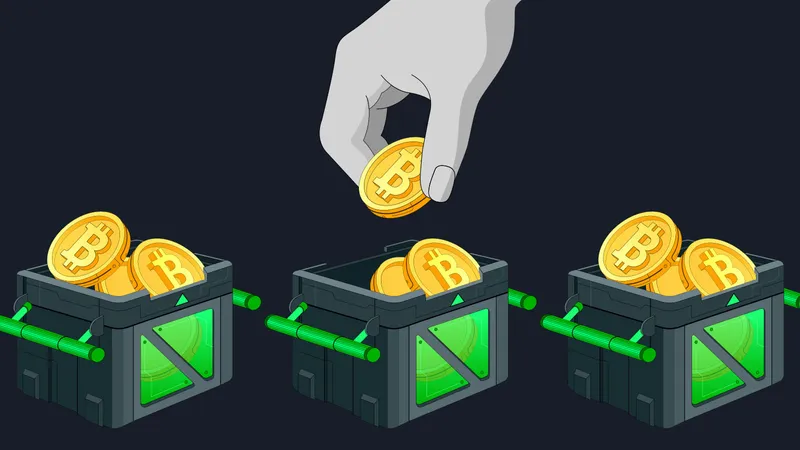
A hybrid approach to portfolio rebalancing offers investors a practical way to balance the benefits of regular adjustments with the need to control trading costs. By combining time-based rebalancing—such as reviewing your portfolio quarterly or semi-annually—with threshold-based triggers, you can respond to significant market movements without over-trading.
For example, you might set a schedule to rebalance every six months, but also establish a rule to trigger rebalancing if any asset class deviates by more than 5% from its target allocation. This strategy helps maintain your desired risk level and keeps your portfolio aligned with your investment objectives, while minimizing unnecessary trading and the associated increase in costs.
The hybrid approach is especially valuable in volatile markets, where frequent swings can quickly throw allocations off balance. By setting clear guidelines for when and how to rebalance, investors can ensure their portfolios remain on track, supporting long-term growth and stability without incurring excessive trading costs.
Rebalancing in the crypto context means periodically realigning the 40 30 20 10 structure when certain layers drift after strong bull or bear moves. Rebalancing helps protect investors from unwanted risks while allowing for potential rewards. It also helps restore your portfolio’s diversification, so that your risks and returns potential are spread widely among investments. Without rebalancing, a portfolio that started balanced can become dangerously concentrated.
There are three main approaches to deciding when to rebalance: time-based, threshold-based, and hybrid approaches. The most practical approach uses a hybrid approach combining time-based and threshold-based triggers:
A disciplined crypto portfolio should typically be rebalanced on a quarterly or semi-annual basis. Long-term investors often rebalance once or twice per year, while more active investors may rebalance more frequently if allocations drift quickly. Rebalancing often means selling equities or other assets that have risen in value and reallocating to those that have fallen below target allocations. For example, if Bitcoin or other equities rise and now represent a larger portion of your portfolio, rebalancing involves trimming those positions and rotating proceeds into underweight layers that may have experienced a fall in value. This process is not about attempting to predict macro cycles or short-term market falls; it is about maintaining your intended risk exposure.
Example of drift and correction:
Suppose you started 2026 with a clean 40 30 20 10 allocation. After a strong Q1 bull run, your portfolio shifted to 52 24 16 8 as Bitcoin and a few mid caps outperformed. A quarterly review would trigger rebalancing. This means selling some Bitcoin gains, adding to the emerging layer, and potentially increasing frontier exposure back to 10 percent.
Tax considerations matter for investors in jurisdictions where crypto trades can trigger capital gains. Rebalancing can trigger tax consequences if you are selling part of a position in a taxable account, and the impact may vary depending on the type of account (taxable vs. tax-advantaged). When possible, use new contributions and stablecoin inflows to rebalance rather than selling. This approach lets you bring allocations back to target without triggering taxable events, reducing costs associated with frequent trading.
Dollar-Cost Averaging (DCA) is also advised as a strategy to mitigate the impact of market volatility.

Evaluating your portfolio’s performance is essential for long-term investors who want to balance growth with risk management. Key metrics such as risk-adjusted returns, the Sharpe ratio, and the Sortino ratio provide valuable insights into how well your investment strategy is working relative to the risks taken.
A high Sharpe ratio, for example, indicates that your portfolio is generating strong returns for each unit of risk, while the Sortino ratio focuses specifically on downside volatility. Regularly reviewing these metrics allows investors to identify strengths and weaknesses in their portfolio, make informed adjustments, and ensure that their strategy remains effective over time.
For long-term investors, tracking performance metrics is not just about chasing returns—it’s about maintaining a stable, resilient portfolio that can weather market fluctuations and deliver consistent growth in line with your investment objectives.
Tax considerations play a critical role in portfolio management, especially when rebalancing involves selling securities to maintain your target asset allocation. Each sale can trigger capital gains taxes, which may increase costs and reduce the overall value of your investments.
To optimize your portfolio and minimize tax liabilities, consider strategies such as tax-loss harvesting—selling assets that have declined in value to offset gains elsewhere in your portfolio. Utilizing tax-advantaged accounts, like 401(k)s or IRAs, can also help reduce your tax burden and support your long-term investment objectives.
Understanding the tax implications of your asset allocation and rebalancing strategies is essential for maintaining alignment with your risk tolerance and financial goals. By proactively managing taxes, investors can preserve more capital, reduce costs, and ensure their portfolio continues to reflect their intended value and objectives.
The 40 30 20 10 model is a starting point. You should customize it based on your risk tolerance, income stability, and investment horizon. A minimum three to five year view makes sense for most crypto allocations given the market’s volatility cycles.
Concrete customization examples:
A conservative investor in 2026 might shift to a 50 25 15 10 allocation with more in Bitcoin and tokenized bonds, accepting lower growth potential in exchange for stability. This profile suits someone closer to retirement or with lower income stability who cannot afford significant drawdowns.
A very aggressive investor might use a 30 35 25 10 allocation with heavier exposure to growth platforms and emerging projects. This profile works for younger investors with high risk tolerance, stable income, and a genuine ability to hold through bear markets without panic selling.
An income focused investor might emphasize protocols with fee sharing mechanisms and yield generating tokenized assets, tilting the core layer toward tokens that produce cash flow rather than pure capital appreciation.
Basic risk controls to implement:
Document your personalized allocation plan on paper or in a digital note. Having a certain amount of predefined rules helps you stick to your strategy during volatility instead of reacting emotionally to headlines. When market performance turns negative, your documented plan gives you confidence to review calmly rather than make impulsive decisions.

The key outcome of this article is a concrete, layered allocation template for 2026, not a list of hot tokens. The 40 30 20 10 structure helps balance stability, growth, and intelligent speculation in a way that reflects how the crypto market has matured.
Success in the 2026 crypto market will depend more on risk aware allocation, ongoing research, and scheduled rebalancing than on any single winning coin pick. The investors who thrive will be those who commit to a process rather than chasing momentum.
Your immediate next steps:
Disciplined allocation and research driven selection can help you participate in the next wave of digital asset growth through 2030 while keeping risk controlled. The blueprint exists. The data supports it. Now the execution is up to you.