As AI becomes more embedded in our lives, its trustworthiness is under scrutiny. Centralized AI systems are often opaque and susceptible to bias and manipulation. But can we keep AI honest? This article explores decentralized AI—why blockchain might be the only thing keeping AI honest.
The digital era has ushered in an age of artificial intelligence, transforming industries and reshaping our daily lives. Yet, there’s a prevailing concern about whether this era can be both honest and secure for trusted AI. As AI systems are increasingly incorporated into critical sectors such as medical and engineering, questions about their reliability and trustworthiness are mounting, particularly in the context of machine intelligence.
One of the significant challenges lies in the opacity of AI models. Often, the internal processes and decision-making parameters of these systems remain unclear, contributing to a lack of transparency. This opacity not only fuels mistrust but also raises ethical concerns, especially when AI training is biased, leading to unfair or one-sided decisions. The ethical dilemmas and misinformation threats associated with AI usage create a significant trust deficit.
Bias in AI training is a critical issue. If the data fed into machine learning models is biased, the AI outputs will likely reflect those biases, resulting in decisions that may be unfair or discriminatory. This not only affects the trustworthiness of AI systems but also raises serious ethical questions. For instance, in the medical field, biased AI could lead to misdiagnoses or improper treatment plans, jeopardizing patient safety and trust.
Centralized AI systems are particularly vulnerable to data manipulation, privacy invasion, and monetization by private entities. This centralization further undermines trust, as users become wary of how their data is being used and manipulated. The potential for data breaches and the misuse of personal information only adds to the growing skepticism surrounding AI systems. In contrast, in blockchain-based decentralized AI, data is processed by segmenting it into smaller components and distributing it across the network, which enhances security, integrity, and privacy—especially important in sensitive sectors like healthcare.
To build trust in AI systems, there is a pressing need for decentralized security mechanisms rooted in verifiable infrastructure. This is where blockchain technology comes into play, offering a decentralized and transparent solution to the trust deficit in AI. Blockchain creates an environment where data integrity is preserved, and AI decision-making processes are transparent and accountable.
The trust deficit in AI goes beyond technical concerns to societal issues. As AI permeates our lives, the demand for reliable, transparent, and ethical systems becomes paramount. Blockchain technology, with its decentralized nature and tamper-proof capabilities, provides a promising solution to these challenges, paving the way for a future where AI can be trusted and relied upon.
Blockchain technology is not just a buzzword; it is a revolutionary tool that can enhance the integrity and transparency of AI systems. Blockchain provides a secure and transparent method to store provenance data, making it difficult to alter information. This capability is crucial for maintaining the authenticity and integrity of the data used in AI training and decision-making processes.
Blockchain makes decentralized AI training and inference more efficient and secure through incentive mechanisms and peer-to-peer collaboration, enabling a permissionless environment where resources are coordinated without relying on centralized entities.
One of the primary benefits of blockchain is its ability to record all data transactions in an immutable way. This creates tamper-proof logs that can be used for auditing AI processes, ensuring that every change made to the data is tracked and verifiable. Such transparency is essential for compliance and audits, as it provides a clear trail of data provenance and usage.
The decentralized nature of blockchain enhances trust in AI decision-making processes. Distributing data across a decentralized network ensures that no single entity controls the entire system, reducing risks of data manipulation and privacy invasion. This decentralized approach aligns perfectly with the need for verifiable infrastructure in AI systems.
Smart contracts, a key feature of blockchain technology, play a pivotal role in maintaining AI integrity. These self-executing contracts with the terms of the agreement directly written into code ensure that AI systems operate as intended without human intervention. Smart contracts can automate various aspects of AI processes, from data validation to model updates, ensuring that the system remains honest and transparent.
Token holders in a blockchain network also contribute to the security and integrity of AI systems. Staking tokens incentivizes participants to act in the network’s best interest, ensuring trustworthiness of data and processes. This token-based incentive mechanism aligns the interests of all participants, promoting a collaborative and secure environment for AI development.
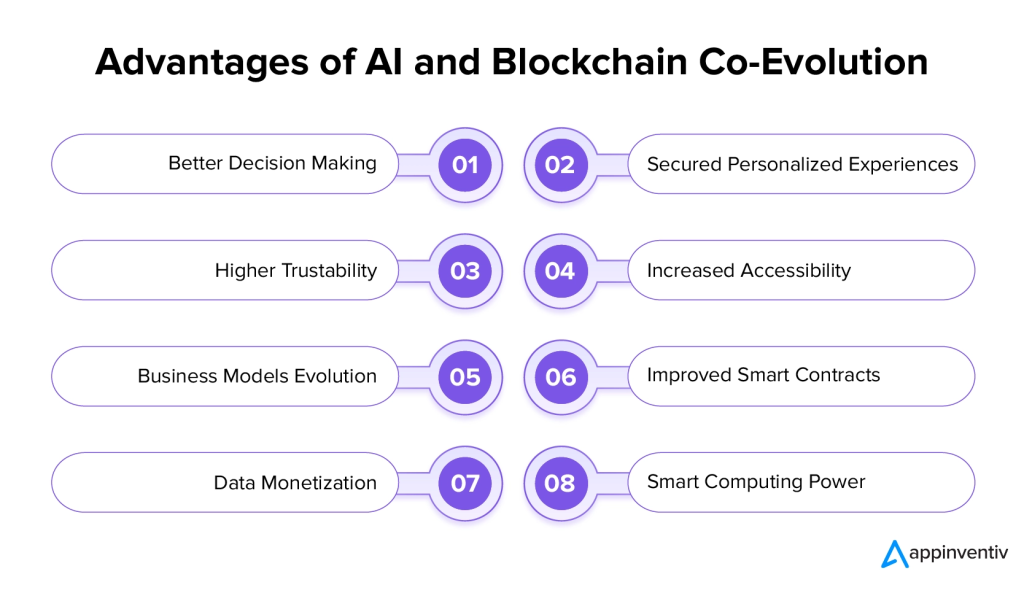
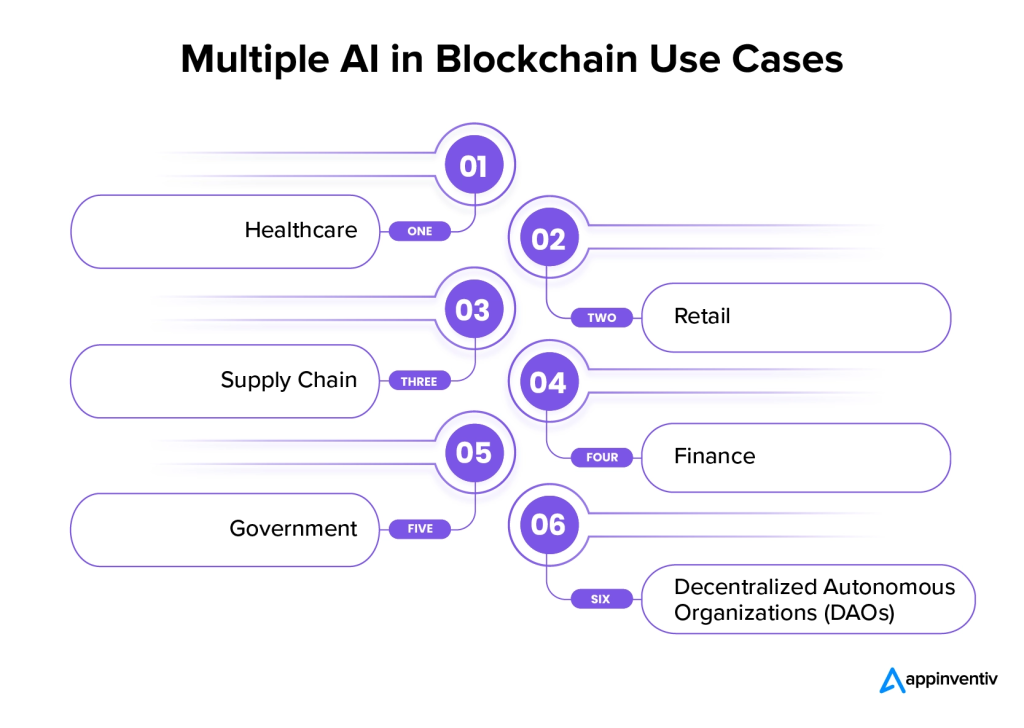
Blockchain technology provides a robust solution to the trust deficit in AI systems. By ensuring data integrity and transparency, blockchain can enhance the reliability and security of AI decision-making processes. This integration is not just about technology; it is about creating a trustworthy and ethical AI ecosystem that can be relied upon in various sectors, from healthcare to finance.
In a world where AI systems and generative AI are becoming increasingly sophisticated, distinguishing humans from AI has become a critical challenge. Proof of Humanity (PoH) mechanisms aim to confirm that each participant in a decentralized AI system is a unique human, preventing Sybil attacks that exploit fake identities. This verification maintains the integrity and trustworthiness of decentralized networks.
One effective approach to PoH is the use of decentralized identity systems. These systems ensure that only verified human accounts can engage in specific activities, mitigating issues such as spam and misinformation. Community verification methods, like social graphs, enable decentralized identity systems to establish unique identities without traditional processes.
The integration of PoH mechanisms in decentralized AI networks enhances trust by ensuring that interactions occur between verified human participants. This verification is crucial for maintaining the integrity of digital interactions and ensuring that AI systems operate in a trustworthy manner. Without PoH, the risk of AI-generated spam, misinformation, and malicious activities increases significantly.
PoH mechanisms also play a vital role in maintaining the ethical standards of AI systems. Ensuring only verified humans participate in decision-making helps prevent AI misuse for malicious purposes. This ethical consideration is essential for building trust in AI systems and ensuring that they are used for the benefit of society.
Incorporating PoH mechanisms into decentralized AI networks is not without its challenges. Preventing identity fraud, ensuring the privacy of sensitive data, and maintaining decentralization in the verification process are critical issues that need to be addressed. Despite these challenges, the benefits of PoH make it a crucial component of trustworthy AI systems.
Zero Knowledge Proofs (ZKPs) are a powerful cryptographic tool that allows verification of statements without revealing sensitive data. In the context of AI, ZKPs can play a crucial role in ensuring privacy and security by allowing the verification of AI processes without exposing the underlying data. ZKPs can be used to prove that a particular model has reached its conclusions securely and privately, without exposing sensitive data or model details. This capability is essential for maintaining the integrity of AI systems while protecting user privacy.
The primary purpose of ZKPs in AI is to verify statements without revealing data. For instance, ZKPs can be used to verify that an AI model has been trained on a specific dataset without revealing the actual data. This ensures that the training process is transparent and verifiable, without compromising the confidentiality of sensitive information.
Applying ZKPs frequently in AI adds a layer of verifiable AI infrastructure. This infrastructure ensures that AI models operate with integrity and transparency, as every aspect of the model’s training and decision-making processes can be verified without exposing sensitive data. This is particularly important in sectors like healthcare and finance, where data privacy is paramount.
Polkadot’s approach to proof of personhood employs zero-knowledge cryptography to verify a person’s uniqueness without disclosing their identity. This method ensures that individuals can participate in decentralized networks without compromising their privacy. The planned PoP system includes two credential levels: DIM1 for unique identity verification and DIM2 for additional validation of real-world identity.
Smart contracts can leverage ZKPs to enhance the security and privacy of AI systems. By incorporating ZKPs into smart contracts, we can create tamper-proof AI processes that are both transparent and secure. This integration is crucial for building trust in decentralized AI networks and ensuring that AI systems operate with integrity.
The use of ZKPs in AI is not just about security; it is about creating a verifiable and trustworthy AI ecosystem. By ensuring that AI processes can be verified without exposing sensitive data, ZKPs enhance the transparency and integrity of AI systems. This capability is essential for building trust in AI and ensuring that it is used for the benefit of society.
Data validation is a critical aspect of maintaining the integrity and security of decentralized AI networks. Blockchain technology plays a pivotal role in this process by distributing data across the network and creating immutable copies. This ensures that the data used in AI systems is authentic and unaltered, providing a robust foundation for trustworthy AI processes.
Blockchain enhances agreement with data integrity by providing an audit trail that tracks every change made to the data. This audit trail is essential for compliance and audits, as it ensures that every aspect of the data’s provenance and usage can be verified. By creating immutable copies of the data, blockchain ensures that the data remains tamper-proof and secure.
Decentralized networks leverage different nodes to distribute data and validate its authenticity. This decentralized approach reduces the risk of data manipulation and ensures that no single entity has control over the entire system. Blockchain technology enables the whole system of AI development and training to operate without central authority, promoting collective ownership and resource sharing. This is particularly important in AI systems, where data integrity is crucial for maintaining the reliability and transparency of AI processes.
Zero Knowledge Proofs (ZKPs) can enhance the privacy of machine learning models by enabling training on sensitive data without exposing it. This capability is essential for maintaining the confidentiality of sensitive information while ensuring that the AI models operate with integrity and transparency. Integrating ZKPs into AI systems creates a secure environment for robust, privacy-preserving data validation.
Provenance involves tracking the source, creation process, and ownership of digital content. This is crucial for verifying the authenticity of the data used in AI systems and ensuring that the data remains unaltered. Blockchain-enabled provenance tracking creates a transparent and verifiable data validation process, enhancing AI systems’ integrity.
Data validation is not just a technical process; it is a fundamental aspect of building trust in AI systems. Ensuring data authenticity and integrity in AI processes creates a trustworthy and reliable ecosystem. Blockchain technology, with its decentralized and tamper-proof capabilities, provides a robust solution to the challenges of data validation in AI systems.
Incentive alignment is a cornerstone of any successful decentralized AI network. Key points include:
Blockchain technology plays a crucial role in managing the computing power needed for AI. Decentralizing data storage and processing ensures that AI training and inference resources are distributed across independent nodes. This decentralized approach reduces the risk of centralization and ensures that the network remains resilient and secure.
The use of decentralized storage is particularly beneficial for AI systems. It ensures that training data remains accessible while being resistant to tampering and censorship. This is essential for maintaining the integrity of the AI training process and ensuring that the models are trained on authentic and unaltered data.
Aligning incentives in decentralized AI networks is not just about rewarding contributors; it’s about creating a sustainable and collaborative ecosystem:
Rewarding miners and other contributors rewarded based on their participation and contributions is a key aspect of incentive alignment. This ensures that the network operates smoothly and that the resources required for AI training and inference are always available. By aligning incentives in this way, decentralized AI networks can create a sustainable and collaborative ecosystem that promotes innovation and trust.

The rise of generative AI has brought about a new set of challenges, particularly in the realm of digital provenance and combating deepfakes. AI-generated content, often indistinguishable from reality, has the potential to promote misinformation and manipulation. The ability to create convincing deepfakes was once the realm of science fiction, but is now a real-world challenge. Blockchain technology plays a crucial role as a defense against fake, fabricated, and false information, ensuring that digital content can be verified and trusted.
Malicious activities from AI-generated content include:
Blockchain-enabled provenance tracking creates a transparent, verifiable process that was created to ensure digital content authenticity.
Provenance tracking involves monitoring the source, creation process, and ownership of digital content. This is crucial for verifying the authenticity of AI-generated content and ensuring that it remains unaltered. By creating tamper-proof logs of the content’s provenance, blockchain technology can help combat the spread of deepfakes and other forms of misinformation.
Zero Knowledge Proofs (ZKPs) can also play a role in combating deepfakes by ensuring the privacy and integrity of AI models. ZKPs enable AI process verification without exposing sensitive data, adding a layer of security that maintains content integrity. This is essential for building trust in AI systems and ensuring that they are used ethically and responsibly.
It’s not just about identifying deepfakes; it’s about creating a system where the authenticity of all digital content can be verified. Blockchain-enabled provenance tracking creates a transparent, verifiable process to ensure digital content authenticity. This is crucial for maintaining trust in the digital age and ensuring that AI systems operate with integrity.
Combating deepfakes is not just a technical challenge; it’s an ethical one. By ensuring that AI-generated content can be verified and trusted, we can create a digital ecosystem where misinformation and manipulation are minimized. Blockchain technology, with its decentralized and tamper-proof capabilities, provides a robust solution to the challenges of digital provenance and combating deepfakes.
The democratization of AI access is a critical goal in the evolution of AI systems. Decentralized AI infrastructure operates by distributing tasks among different nodes, reducing the risks associated with centralization. Bittensor, Gensyn, and Akash Network are leading the charge in creating decentralized compute platforms. They are also working on model hosting solutions. These platforms empower participants to contribute models, datasets, and computing resources, creating a collaborative and inclusive environment. Within these decentralized AI platforms, ai agents act as autonomous entities that coordinate tasks, facilitate data exchange, and enable collaboration between participants.
Decentralized AI marketplaces are a key component of this democratization process. They:
Platforms like SingularityNET and OpenxAI exemplify decentralized AI systems by allowing diverse participation without centralized control. Ocean Protocol is another example, providing a decentralized data exchange infrastructure that enables AI and analytics applications within a tokenized ecosystem. These platforms facilitate the sharing of AI resources and knowledge, ensuring that AI development is not restricted to a few privileged entities. This democratization of AI access is essential for promoting innovation and ensuring that the benefits of AI are accessible to all.
Decentralized networks leverage the power of blockchain technology to create a secure and transparent environment for decentralized finance and AI development. By distributing tasks among different nodes, these networks reduce the risks associated with centralization and ensure that the AI systems operate with integrity and transparency. This decentralized approach aligns perfectly with the goal of democratizing AI access and promoting innovation.
Data sharing is another crucial aspect of decentralized AI platforms. By enabling the sharing of datasets and models, these platforms create a collaborative environment where participants can build on each other’s work. This collaborative approach not only promotes innovation but also ensures that the AI systems are trained on diverse and comprehensive datasets, enhancing their reliability and performance.
The democratization of AI access is not just about technology; it’s about creating a fair and inclusive environment where everyone can participate in AI development. By leveraging decentralized platforms and blockchain technology, we can create a robust and transparent AI ecosystem that promotes innovation and ensures that the benefits of AI are accessible to all.
Effective governance is crucial for the success of decentralized AI ecosystems. Community governance allows contributors to have a say in the evolution and rules of the AI models they help to build. In decentralized AI systems, participants are empowered to have own right over their contributions, data, or models, enabling them to possess, govern, and benefit from the AI assets they develop or contribute to. This decentralized governance model enhances inclusivity and adaptability in AI regulation by integrating diverse values and perspectives.
Smart contracts play a pivotal role in the governance of decentralized AI systems. These self-executing contracts automate the compensation of contributors based on their participation and contributions. Model ownership is managed collectively through blockchain-based governance, allowing for distributed control and improvement of AI models by the community rather than a single centralized entity. By leveraging smart contract code, decentralized AI networks can ensure that the governance processes are transparent and fair, promoting trust and collaboration among participants.
Token incentives are another key aspect of governance in decentralized AI networks. By rewarding contributors with tokens, these networks encourage the provision of computing resources and high-quality data. This incentive mechanism aligns the interests of all participants, promoting a collaborative and secure environment for AI development.
Dynamic feedback mechanisms in decentralized governance allow real-time adjustments to AI models based on community input. This ensures that the AI systems remain responsive to the needs and preferences of the community, promoting fairness and accountability in AI development. By incorporating community feedback, decentralized AI networks can create models that are more accurate and reliable.
Challenges in Proof of Participation (PoP) implementation include preventing identity fraud, ensuring the privacy of sensitive data, and maintaining decentralization in the verification process. However, all these points highlight that the benefits of decentralized governance far outweigh these challenges, making it a crucial component of trustworthy AI systems.
Ethical considerations in AI development are becoming increasingly important, necessitating frameworks that promote fairness and accountability. By leveraging decentralized governance structures, we can create ethical AI systems that operate with integrity and transparency. This is essential for building trust in AI and ensuring that it is used for the benefit of society.
Web3 technologies enable direct transactions between AI services and users, reducing the need for intermediaries and enhancing privacy. This decentralized approach aligns perfectly with the goal of democratizing AI access and promoting innovation. By leveraging Web3 technologies, decentralized AI networks can create a robust and transparent governance model that is responsive to the rapid changes in AI technologies.

The integration of blockchain and AI has the potential to enhance transparency, security, and efficiency in various sectors. Real-world examples demonstrate the practical benefits of combining these two technologies. For instance, Hitachi utilized blockchain to create a secure digital contract management system, significantly increasing efficiency in its procurement process. This example highlights how blockchain can streamline processes and enhance transparency in business operations.
Trust Your Supplier collaborated with IBM to develop a blockchain platform that verifies supplier data, leading to over 70% reduction in onboarding time. By leveraging blockchain for data verification, businesses can enhance the reliability and efficiency of their supply chain processes. This case study underscores the potential of blockchain to improve transparency and trust in business operations.
Renault’s blockchain initiative enhances compliance management in the automotive industry, reducing non-compliance costs by 50%. By leveraging blockchain for compliance management, businesses can ensure that their operations adhere to regulatory standards, reducing the risk of non-compliance. This example demonstrates the practical benefits of integrating blockchain with AI in the automotive industry.
IPwe’s blockchain initiative facilitates the tokenization of intellectual property, improving access and investment opportunities. By leveraging blockchain for IP tokenization, businesses can create new revenue streams and enhance the accessibility of intellectual property. This case study highlights the potential of blockchain to revolutionize the intellectual property landscape.
Marco Polo Network’s blockchain solution enhances trade finance by automating payments through smart contracts, improving reliability and transparency. By leveraging blockchain for trade finance, businesses can streamline their payment processes and enhance the transparency of their financial transactions. Unlike traditional finance, which relies on centralized intermediaries and often lacks transparency, decentralized finance solutions like Marco Polo Network offer greater autonomy and openness in financial transactions. This example underscores the potential of blockchain to transform the trade finance industry.
Ford’s blockchain platform provides a traceable path for cobalt sourcing, promoting ethical practices in electric vehicle production. By leveraging blockchain for supply chain transparency, businesses can ensure that their sourcing practices are ethical and sustainable. This case study demonstrates the practical benefits of blockchain in promoting ethical business practices.
Nestlé’s blockchain solution enables parents to verify the safety and quality of infant products, restoring consumer trust in the brand. Blockchain-enabled product verification enhances consumer trust and ensures product quality and safety. This example highlights the potential of blockchain to enhance transparency and trust in consumer products.
Power Ledger uses blockchain technology to facilitate peer-to-peer energy trading, enhancing efficiency and sustainability in energy markets. The business model of Power Ledger is based on protocol fees and partnerships, which generate revenue and sustain operations while creating value for users and stakeholders. Blockchain-enabled energy trading creates a more efficient and sustainable market. This case study underscores the potential of blockchain to transform the energy sector.
These case studies show that decentralized AI projects are experimenting with innovative business models that differ from traditional centralized services, supporting new forms of revenue generation, economic incentives, and ecosystem sustainability.
The future of AI and blockchain integration is filled with exciting possibilities. Despite the significant interest, the convergence between artificial intelligence and blockchain technology remains largely unexplored. Combining these two technologies can provide enhanced consistency, understandability, and logic, paving the way for new innovations in the AI ecosystem.
Layer 2 Blockchains utilize Zero Knowledge Proofs (ZKPs) to improve scalability while maintaining transaction security and privacy. This approach can enhance the performance of decentralized AI systems, ensuring that they operate efficiently and securely. Layer 2 solutions create scalable, secure AI networks suitable for large-scale applications. A novel consensus mechanism could tie blockchain validation and rewards directly to AI model performance, aligning incentives and enabling secure, permissionless collaboration among nodes.
Specialized blockchains designed specifically for AI applications could improve scalability and performance across decentralized systems. These specialized blockchains can provide tailored solutions that meet the specific needs of AI applications, enhancing their efficiency and effectiveness. This approach can pave the way for the next generation of decentralized AI systems, especially as the challenges and opportunities of training large models in decentralized environments become more prominent.
Modular blockchain architectures may facilitate more efficient integration of AI services by:
Federated learning techniques allow for the collaborative training of AI models across decentralized networks while preserving data privacy. This approach ensures that the AI models are trained on diverse and comprehensive datasets, enhancing their reliability and performance. Decentralized networks can also fine tune AI models after initial pretraining, enabling adaptation to specific tasks or use cases. Federated learning enables collaborative, privacy-preserving AI networks.
Verifiable off-chain computation is a promising approach that leverages AI oracles to enhance trust in decentralized AI systems. By enabling off-chain computation for compute jobs, we can enhance the scalability and performance of AI systems while maintaining their integrity and transparency. There are also ongoing efforts to bring model inference on-chain, which could further improve trust and transparency in decentralized AI runtimes. This approach can pave the way for more efficient and trustworthy AI networks.
Enhanced tokenomics can create sustainable economic models that encourage participation and value generation within tokenized ecosystems. Robust and transparent tokenomics ensure fair compensation for participants, promoting a collaborative, sustainable AI ecosystem. This approach can enhance the scalability and performance of decentralized AI systems.
In summary, the integration of blockchain technology with AI has the potential to address the pressing concerns of reliability, transparency, and ethical integrity in AI systems. By leveraging blockchain for data validation, provenance tracking, and incentive alignment, we can create a robust and trustworthy AI ecosystem. This integration not only enhances the transparency and security of AI systems but also promotes innovation and collaboration within the AI community.
The democratization of AI access through decentralized platforms ensures that the benefits of AI are accessible to all, promoting a fair and inclusive environment for AI development. Effective governance models, leveraging community input and smart contracts, ensure that AI systems operate with integrity and transparency. By creating a decentralized and collaborative ecosystem, we can build trust in AI and ensure that it is used for the benefit of society.
The future of AI and blockchain integration is filled with exciting possibilities. By exploring emerging trends such as Layer 2 blockchains, federated learning, and verifiable off-chain computation, we can create scalable and efficient AI networks that operate with integrity and transparency. This future promises a more trustworthy and ethical AI ecosystem that can address the challenges of the digital age.
As we move forward, it is essential to continue exploring the potential of blockchain technology to enhance the integrity and transparency of AI systems. By leveraging the power of decentralized networks, we can create a robust and trustworthy AI ecosystem that promotes innovation, collaboration, and trust. The integration of blockchain and AI is not just about technology; it is about creating a digital future that is honest, secure, and beneficial for all.

The primary benefit of integrating blockchain with AI is enhanced transparency and security, which addresses trust issues by ensuring that data used in AI processes is authentic and unaltered. This combination fosters greater confidence in AI applications.
Proof of Humanity (PoH) helps maintain the integrity of AI systems by ensuring that each participant is a verified human, preventing fake identities. This fosters trust and reduces the risks of spam and misinformation.
Zero Knowledge Proofs (ZKPs) enhance AI verification by enabling the confirmation of AI processes while keeping sensitive data private. This promotes trust and transparency in AI systems, ensuring their integrity.
Decentralized platforms democratize AI access by distributing tasks across multiple nodes, fostering collaboration where participants can share models, datasets, and resources. This approach enhances innovation and ensures the benefits of AI are accessible to everyone.
Blockchain and AI integration is effectively used in various sectors, exemplified by applications such as Hitachi’s digital contract management, Renault’s compliance initiative, and Power Ledger’s energy trading platform. These innovations enhance data security, streamline processes, and improve transparency across industries.
Artificial intelligence (AI) is transforming the way we interact with technology, enabling computer systems to perform tasks that once required human intelligence. At its core, AI involves building systems that can learn from data, adapt to new information, and make decisions with minimal human intervention. These AI systems use sophisticated algorithms to analyze vast amounts of data, identify patterns, and generate insights that drive everything from language translation to image recognition.
One of the most notable advancements in artificial intelligence is the development of large language models, such as ChatGPT. These models are capable of generating human-like text, answering complex questions, and even engaging in meaningful conversations. By leveraging massive datasets and advanced machine learning techniques, large language models have set new standards for what AI systems can achieve in natural language processing and beyond.
As AI continues to evolve, its applications are expanding across industries, from healthcare and finance to transportation and entertainment. However, the rapid growth of AI also brings important questions about the risks and challenges associated with these technologies. Issues such as bias in decision making, lack of transparency in how models operate, and the need for accountability in AI systems are becoming increasingly important as artificial intelligence becomes more deeply embedded in our daily lives.
The effectiveness of AI systems is closely tied to the quality and diversity of the training data used during their development. Training data serves as the foundation for building accurate and reliable AI models, providing the real-world examples that these systems use to learn and make predictions. When AI models are trained on comprehensive and well-curated datasets, they are better equipped to generalize from past examples and perform effectively in new situations.
However, gathering and preparing high-quality training data is a complex process that often requires significant time, resources, and expertise. The process involves collecting relevant data, cleaning and labeling it, and ensuring that it accurately represents the scenarios the AI system will encounter. If the training data is biased or incomplete, the resulting AI models may produce outputs that reinforce existing inequalities or fail to perform as expected in diverse environments.
To address these challenges, researchers and developers are adopting innovative approaches such as data augmentation and active learning. Data augmentation involves creating new training examples by modifying existing data, which helps improve the robustness of AI models. Active learning, on the other hand, allows AI systems to identify and request the most informative data points for training, making the process more efficient and effective.
Ultimately, the quality of training data directly impacts the decision-making capabilities of AI systems. By prioritizing diverse, accurate, and representative data, developers can build AI models that are not only more reliable but also fairer and more transparent in their decision-making processes. This focus on high-quality training data is essential for advancing the field of artificial intelligence and ensuring that AI systems deliver trustworthy results in real-world applications.